Record where the problem shows up
Look at the moving panel and the fixed panel from the room side. If you can safely reach the outdoor face, note whether the haze wipes off that side or the inside face. A cloudy patch that remains between the panes points toward a sealed-unit problem. Write down which panel is affected. A door with one clear panel and one foggy panel gives the glazier a useful side-by-side reference.
Describe how the door moves
Tell us whether the moving panel drags across the full track, catches at one end or closes smoothly but misses the latch. Note whether it gets worse in cold weather or after rain. A sliding or locking complaint needs its own line on the estimate, even if the glass is also foggy. Share a short video from floor level if the panel can be operated normally.
Take three photos before requesting a price
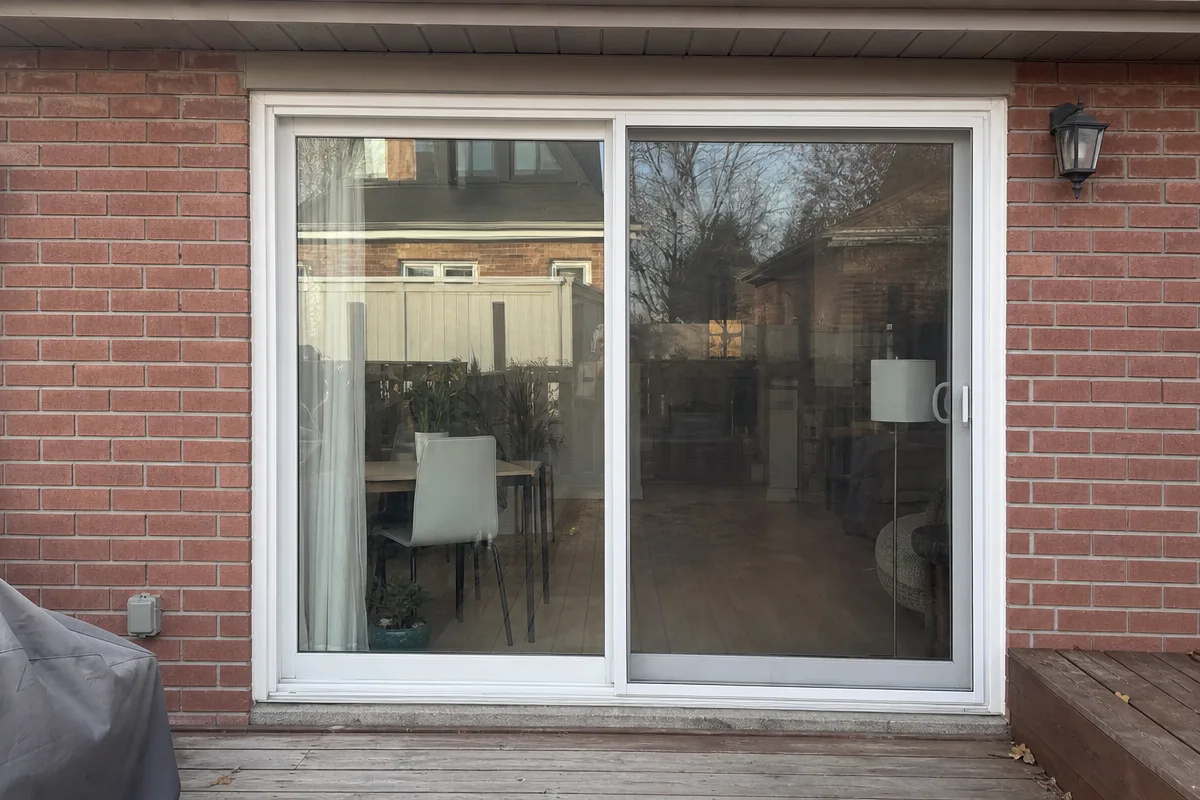
Start with the whole door so we can see the frame, track and which side slides. Take a close-up of the fog or damage. Then photograph any readable label or etched mark near a glass corner or along the frame. Send the visible width and height in one unit, labelled as visible glass. A replacement order needs a separate check of the glass edges, overall thickness and what fits the panel.
What a useful estimate should say
Ask for a written scope that names the affected panel and explains whether the price covers the sealed unit, hardware, or both. If the track or panel frame is damaged, ask what the next inspection will determine. That way you can compare two quotes without guessing which problems each one covers.