Noticing the Drag at the Door’s End of Travel
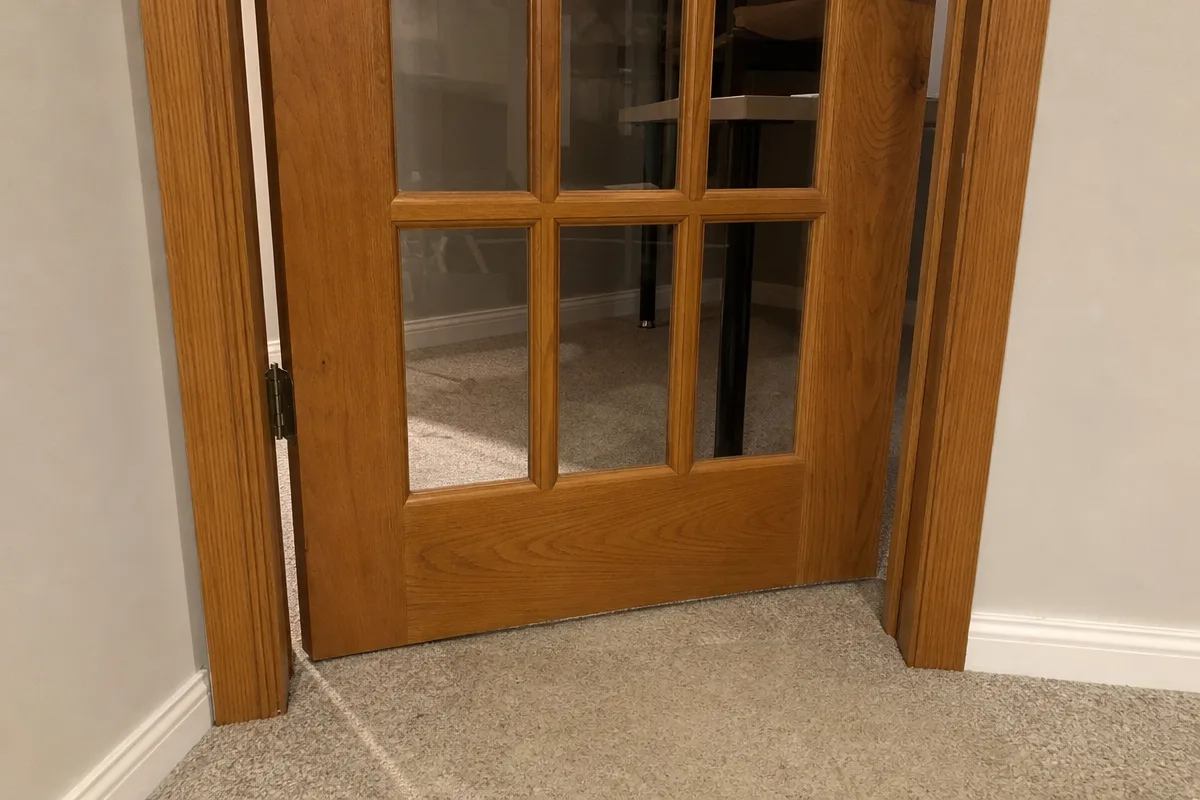
When your basement door drags only at the very end of its swing, it means the door rubs against the floor or frame just before it fully closes or opens. This subtle problem can cause wear on the door’s bottom edge or floor covering. Observing exactly where the dragging happens—whether near the hinge side or the latch side—helps pinpoint the issue’s cause. Take note if the drag occurs when pushing the door closed or pulling it open, as this detail is important to share with Glass Rescue.
What to Show Glass Rescue for a Clear Diagnosis
To help Glass Rescue understand the problem, take a clear photo of the entire door in its closed position and another photo showing the door at the point where dragging happens. Capture the bottom edge near the floor and any visible hardware like hinges or door closers. If the door has a closer, note its type and position, as these affect door movement. Avoid guessing adjustments; instead, focus on showing the symptoms and the door’s environment in your photos.
Checklist for Reporting Door Dragging Issues
When contacting Glass Rescue, describe: 1) The exact moment the drag occurs during the door’s swing, 2) Whether the drag is on opening, closing, or both, 3) Visible signs like scuff marks or worn carpet, 4) The door’s material and any hardware visible, and 5) The room type and flooring surface. Providing this information along with your photos ensures a faster, more accurate service visit tailored to your basement door’s needs.
Sources
Prepared with AI assistance using the references above.